Obby bike: Parkour Adventure
- 4.5
- Rating
- 10.00M
- Installs
- Free
- Price
 Analysis by App-foxy
I tried Obby bike: Parkour Adventure as a quick racing game for the kind of shared-device moments when someone has only a few minutes to play. Its idea is easy to understand: guide a bike through an obstacle course and try to finish faster than before. That simplicity makes it approachable, but it also means the game depends heavily on whether you enjoy repeating short challenges and improving through practice rather than looking for a large racing experience.
In my experience, it fits best on a family tablet or a phone passed between people in the same room. One person can attempt a course, hand over the device, and let the next player try to beat the result. There is no need to explain a complicated story or a long list of controls before starting. The appeal is immediate, especially for younger players who like colorful obstacle-course ideas and for adults who want something light rather than a serious driving simulator.
How the parkour racing idea works in everyday play
I’d look at the parkour racing idea as a compact challenge built around learning a route, not as a miniature version of a full racing season. That distinction helps set expectations: the fun comes from noticing where control and timing matter, then seeing whether a more deliberate attempt feels better. With that in mind, the next question is how the game’s visual and setting choices support that focused loop.
You May Also Like

 Blood Strike: 2.5 Anniversary
Blood Strike’s Loadouts Turn Every Drop Into a Tactical Gamble
A close look at Blood Strike’s custom loadouts: how fast access to signature weapons reshapes its battle royale rhythm, rewards preparation, and narrows the gap between fights.

 Pandora - Music & Podcasts
Pandora’s Music Is Easy to Start, but Harder to Recover
Pandora’s strength is its low-effort path from a seed to a station. Its weak spot is how much confidence it asks you to place in connection, setup, and quiet recovery.

 8 Ball Pool
 Is Built on Rivalries, Rematches, and Routine
A close look at the rivalries, rematches, shared routines, and unanswered safety questions that turn a quick pool match into a persistent mobile community.

 Samsung Music
’s Quiet Strength Is Playing What You Already Own
Its reach comes less from spectacle than from dependable access to a personal library. That simplicity is both the app’s strongest retention engine and its ceiling.

 AccuWeather: Weather Radar
AccuWeather Review: A Quick, Clear Forecast for Everyday Decisions
For everyday plans, the best forecast is the one you can understand quickly. AccuWeather makes rain timing, radar, and local conditions easy to act on, with a few trade-offs.

 Hill Climb Racing
Why Hill Climb Racing Still Turns Crashes Into One More Run
A tiny car, a bumpy hill and one more upgrade: Hill Climb Racing keeps resurfacing because its simple chaos makes every near-miss feel personal.
More From Our News Desk



A simple game for short shared sessions
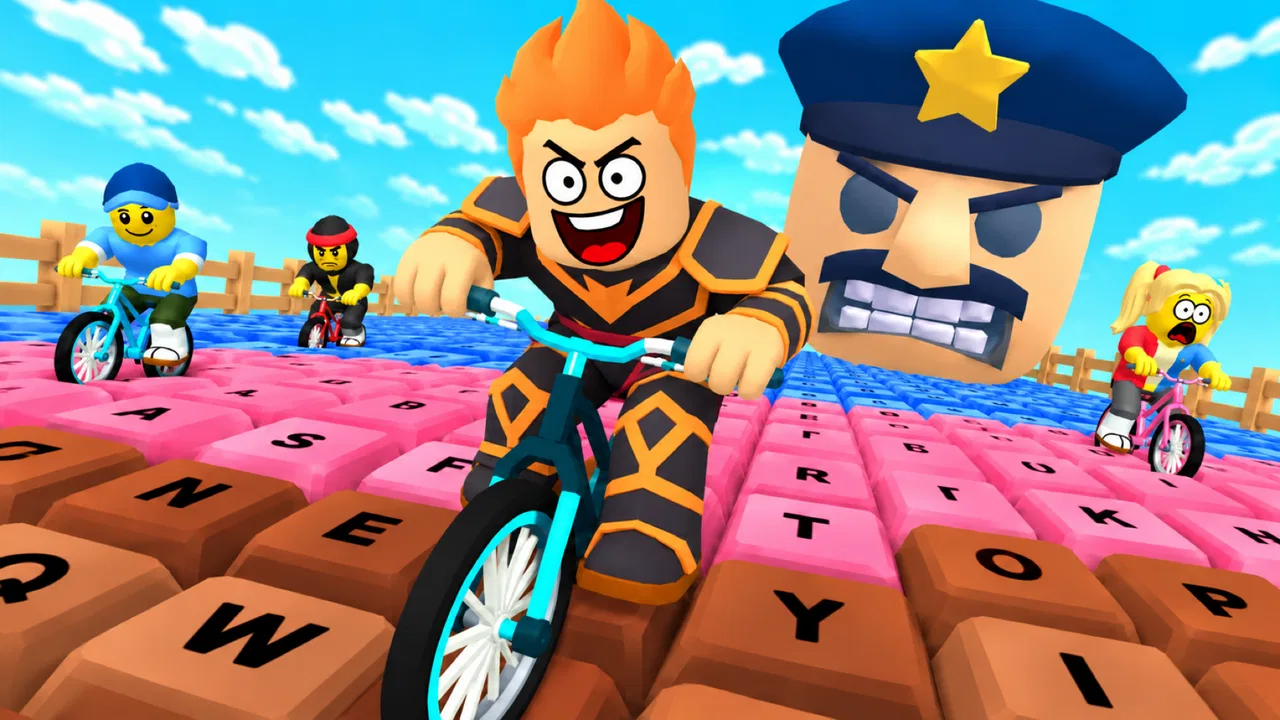
The central attraction is the combination of biking and obstacle-course movement. Instead of focusing on realistic roads, traffic, or detailed vehicle tuning, the game puts attention on getting through hazards quickly. That gives each attempt a clear purpose: stay on the route, recover from mistakes, and improve your run.
That structure works particularly well when a device is shared. Imagine a child playing while waiting for an appointment, then giving the phone to a sibling during a car ride. Each attempt can be treated as a small challenge rather than a commitment to a long race series. I found that this makes the game easy to pause socially, even when the gameplay itself encourages another try.
The trade-off is that players who expect the variety of a full racing package may find the experience narrow. Traditional racing games usually offer recognizable tracks, vehicle collections, upgrades, or competitive events. This one is more focused on navigating an obstacle route. Its strength is the direct challenge; its weakness is that it may not satisfy someone who wants a broad career mode or realistic driving.
Why repeated attempts matter
Obstacle racing is naturally built around learning. A first run is often about discovering where the route becomes difficult, while later runs are about controlling speed and timing more carefully. I recommend treating early failures as information rather than judging the game after a single attempt. The useful question is not only whether you finish, but whether you understand what caused the mistake.
A practical technique is to change one thing at a time. If a jump goes wrong, try approaching it with a different pace on the next attempt instead of changing every movement at once. This makes improvement easier to notice and turns the game into a small coordination exercise. On a shared device, that also helps each player give useful advice instead of simply saying that the course feels difficult.
Another good household routine is to agree on a simple rule before passing the device around. For example, each person gets a fixed number of attempts, or everyone keeps playing until they complete the same section. This prevents the most persistent player from holding the phone indefinitely and keeps the game friendly when skill levels are different.
What makes it suitable for younger players
The game is listed for Everyone, and its basic racing concept is easy to explain without relying on complicated language. A child who understands the idea of steering a bike through an obstacle course can begin exploring it quickly. That does not guarantee that every section will feel easy, because timing-based movement can still be frustrating, but the premise itself is accessible.
I would still introduce it alongside an adult or older sibling when it is being used on a shared device. That is not because the racing concept is difficult; it is because a shared phone or tablet may also contain personal material, account information, or purchases unrelated to the game. The safest routine is to hand over the device only after the owner has opened the game and confirmed that the correct screen is visible.
For younger children, the best use is probably supervised turn-taking rather than unrestricted access to the whole device. The game can provide a harmless activity, but the device belongs to a household, not automatically to the child using it. Keeping those two ideas separate avoids confusion when the player wants to continue after the agreed play time.
Setup boundaries before handing over the phone
The game is free to install, which removes the biggest barrier for trying it. It does include in-app purchases ranging from ninety-nine cents to thirteen dollars and ninety-nine cents per item. That makes a quick setup check worthwhile, especially if children use the same device as an adult’s account.
I would decide in advance who is allowed to approve purchases and whether the player can reach any purchase screen at all. A child may understand the racing challenge without understanding that a tap can have a financial consequence. The useful boundary is simple: gameplay is available, but purchases require the device owner’s permission.
This is also a good reason to avoid treating a shared device as if it were a personal one. Do not rely on a child to remember which account is active or which screen is safe to open. Instead, the adult should handle installation, account checks, and purchase decisions, then pass over the game once everything is ready. That workflow is more reliable than explaining financial details in the middle of an exciting race.
The game requires Android 7.0 or later, so older Android hardware may not be suitable. Before planning a family activity around it, I would check the version of the device being used. This matters more in households with an older spare phone or a tablet that has been kept for children. A game that looks appropriate can still be inconvenient if the device cannot install or run the current release.
Keeping turns fair on one device
Because the experience is based on individual attempts, coordination becomes more important than it might be in a game designed around simultaneous multiplayer. Everyone needs to know whose turn it is, what counts as a completed run, and when the device will be passed on. These small agreements make a noticeable difference when younger and older players share the same session.
I suggest choosing one person to keep track of the order verbally. That person does not need a separate app or a written scorecard; a simple sequence such as “you, then me, then your brother” is enough for a short session. If the game displays a result after a run, the next player can try to beat it. If not, the group can simply compare who reached the finish most consistently.
There is a useful distinction between speed and reliability. A player who finishes once with a risky approach may not be the strongest overall player, while someone who completes the course repeatedly may be showing better control. For a household session, I prefer rewarding improvement and clean finishes rather than making every turn about winning. That keeps the game enjoyable for beginners who are still learning the route.
Handing over the device carefully is another overlooked detail. A phone can be rotated, dropped, or accidentally switched to another screen when several people are excited. I would pause at a natural stopping point, let the current player finish looking at the result, and then pass the device directly to the next person. This is a small habit, but it reduces arguments about whether a turn was interrupted.
Age context and trust
The Everyone rating makes the game a reasonable candidate for mixed-age households, but an age label should not replace normal supervision. Children differ in patience, coordination, and understanding of purchases. One child may enjoy practicing the same obstacle repeatedly, while another may become upset after a few failed attempts. The appropriate amount of guidance depends on the player, not just the label.
I would also explain that the goal is not to win every attempt. Obstacle games can make failure feel more personal than it really is because the same mistake may happen several times. A useful adult response is to ask what part of the course caused trouble and suggest one small change. That turns frustration into a problem-solving moment without taking control away from the player.
Trust works both ways in a shared-device setting. The player should trust the adult to provide a safe, agreed play window, while the adult should be able to trust the player not to open unrelated areas of the device. Since the game is free but offers optional purchases, this conversation is especially important before a child starts playing independently.
For a teenager or adult, the game can work as a quick reflex break between other tasks. For a younger child, it may be better as a supervised turn-taking activity. I would not use it as a substitute for a broader family game if the goal is conversation, cooperation, or a shared story. Its interaction is mainly about individual control and personal improvement, so the social value comes from how the household organizes play.
How it compares with other racing choices
Compared with realistic racing games, this title is less concerned with authentic driving and more concerned with getting through an unusual route. That makes it easier to explain to a child and less demanding for someone who does not care about cars, tracks, or vehicle statistics. It is also a better fit for a quick attempt than a game that expects a longer race or a more involved progression system.
Compared with endless runners, the obstacle-course concept gives the player a clearer sense of a route and a finish. Endless games can be excellent for chasing distance, but they often become about surviving as long as possible. Here, the attraction is reaching the end quickly and learning the course. Players who like visible goals may prefer that structure.
Compared with large multiplayer racing games, it is much less suitable for a group that wants everyone competing at the same time. Its household strength is passing the device around, not creating a full online tournament. If your priority is live competition, detailed customization, or a large collection of cars, another racing game would likely be a better choice. If your priority is a straightforward obstacle challenge that several people can sample in turn, this one makes more sense.
Performance expectations and practical limitations
The current version is 1.34.14, and the game has been available since December 8, 2023. It has reached over five million installs and holds a 4.2 average from around six thousand ratings, which suggests that the basic idea has found a substantial audience. I see those figures as signs of broad interest rather than a guarantee that every household will enjoy the same style of play.
Its free entry is convenient, but the optional purchases should be part of the decision for families. Even a small purchase can become a source of disagreement if the device owner and the player have not discussed it. I would install it, check the opening flow, and establish the household rule before allowing unsupervised turns.
The game also has a limited natural audience. Someone looking for a deep racing simulator may quickly notice that obstacle navigation is the main attraction. Likewise, a player who dislikes repeating a course after failing may find the learning curve irritating rather than motivating. I would skip it for a household that wants a single shared campaign with cooperative objectives, because the appeal here is more individual and attempt-based.
On the other hand, the focused design is exactly why I would keep it available for short breaks. There is no need to organize a long session or teach a complex control system. A player can try a run, learn from it, and stop. That makes the game practical for waiting rooms, short travel pauses, or a relaxed turn-taking session at home.
Who should install it
I would recommend it to families looking for a free, easy-to-explain racing game that works well with passing the device between players. It is particularly suitable for children who enjoy obstacle courses, players who like improving through repetition, and adults who want a brief game without the commitment of a larger racing title.
I would be more cautious if the device is old, if purchase boundaries have not been arranged, or if the intended player expects realistic cars and extensive customization. The game is also not my first choice for a household seeking direct multiplayer action. In those situations, a conventional racing game or a cooperative title may fit the group better.
One of the most useful ways to approach it is as a small household challenge rather than a complete racing hobby. Set a turn order, decide how purchases will be handled, and encourage players to compare techniques instead of only final speed. Those steps reveal the game’s best quality: it creates a clear, repeatable challenge that is easy to share, even though the game itself remains focused on solo control.
My final view is positive but specific. Obby bike: Parkour Adventure is best when you want accessible obstacle racing for short, supervised or turn-based sessions. It is free, rated for Everyone, and developed by Kids Games LLC, with enough reach to show that the concept appeals beyond a tiny niche. I would install it on a compatible household device, set clear account and purchase boundaries, and recommend it to anyone who enjoys practicing a route until the movement feels right. I would not choose it as a replacement for a deep racing simulator or a simultaneous multiplayer game, but within its narrower goal, it offers an approachable way to turn a few spare minutes into a friendly family challenge.
FAQs for Obby bike: Parkour Adventure
01What is the main objective of Obby Bike: Parkour Adventure?
Obby Bike: Parkour Adventure is a thrilling game where players navigate challenging parkour-style courses on a bike. The main objective is to complete each level by overcoming various obstacles using precise timing and skillful maneuvers. Players can enjoy the adrenaline rush of performing daring stunts while trying to achieve the best time.
02Is Obby Bike: Parkour Adventure suitable for all ages?
Yes, Obby Bike: Parkour Adventure is designed to be family-friendly and suitable for players of all ages. The game offers intuitive controls and a range of difficulty levels, making it accessible for both younger players and seasoned gamers seeking a fun and challenging experience.
03What are the main features of Obby Bike: Parkour Adventure?
The game features a variety of levels with unique parkour challenges, customizable bikes, and stunning graphics. Players can unlock new skins and upgrades as they progress. Additionally, the game offers leaderboards, allowing players to compete globally and challenge friends for the best times and scores.
04Does Obby Bike: Parkour Adventure require an internet connection?
While Obby Bike: Parkour Adventure can be played offline, some features such as leaderboards and certain updates may require an internet connection. Playing online also allows players to access the latest content and compete with others around the world in real-time.
05Are there in-app purchases in Obby Bike: Parkour Adventure?
Obby Bike: Parkour Adventure offers in-app purchases for those who wish to enhance their gameplay experience. These purchases can include bike upgrades, new skins, and other aesthetic items. However, all levels and essential gameplay elements are accessible without spending money, ensuring a fair experience for all players.
Pros
- Engaging parkour challenges.
- Smooth and responsive controls.
- Vibrant graphics and design.
- Variety of levels to explore.
- Regular updates with new content.
Cons
- Occasional in-app ad interruptions.
- Limited customization options.
- Some levels feel repetitive.
- Requires a stable internet connection.
- May drain battery quickly during play.

Obby bike: Parkour Adventure
Gallery